
The Allen & Heath GL2400 is a robust, 24-input, 4-buss live sound mixer, widely supported with readily available user manuals and service documentation online․
Overview of the GL2400 Mixer
The Allen & Heath GL2400-24 stands as a classic analog mixing console, favored for its dependable performance in live sound reinforcement applications․ This 24-input, 4-buss mixer provides a versatile platform for handling a wide range of audio sources․ Online resources, including PDF-MANUALS․com, offer comprehensive user manuals detailing its operation․
Its architecture centers around discrete circuitry, contributing to a warm and musical sound․ The GL2400 features a comprehensive set of inputs – XLR and jack combinations – alongside flexible routing options․ Understanding the signal flow, as outlined in available documentation, is crucial for optimal use․ Furthermore, the availability of a dedicated service manual (GL2400 SM) supports expert repair and maintenance, ensuring longevity for this professional-grade console․
Target Audience for this Manual
This manual is designed for a broad spectrum of users, ranging from live sound engineers and touring technicians to installation professionals and even advanced audio enthusiasts․ Individuals responsible for operating, setting up, or maintaining an Allen & Heath GL2400-24 mixer will find it invaluable․
Prior audio engineering experience is helpful, but not strictly necessary, as the manual aims to clearly explain all functions․ Electronics experts seeking detailed schematics and repair information will benefit from the separate GL2400 SM service manual, readily available for download․ Whether you’re a seasoned pro or new to mixing consoles, this resource provides the knowledge to unlock the full potential of the GL2400 and ensure reliable performance in any application․

Physical Features & Connections
The GL2400 boasts a comprehensive array of front and rear panel connections, facilitating versatile signal routing for both live and studio applications, as detailed in manuals․
Front Panel Layout
The GL2400’s front panel is logically organized for intuitive operation during live performances or studio sessions․ Input channels dominate the upper section, each equipped with gain control, EQ, aux sends, pan, and fader․ Clearly labeled sections delineate microphone and line inputs, alongside insert points for external processing․
Monitoring controls, including headphone outputs and level adjustments, are centrally located for easy access․ The master section houses the stereo and mono buss controls, allowing precise level adjustments and monitoring configurations․ Visual indicators, such as peak LEDs, provide crucial feedback on signal levels․ The layout prioritizes quick access to essential controls, streamlining workflow and enhancing user experience, as thoroughly explained within the official user manual․
Rear Panel Connections
The GL2400’s rear panel provides comprehensive connectivity for diverse audio setups․ XLR and ¼” jack connectors accommodate various input sources, while balanced outputs deliver clean signals to power amplifiers or recording devices․ Dedicated connectors for stereo and mono buss outputs facilitate flexible routing options․
Matrix outputs offer additional signal distribution capabilities, ideal for complex sound reinforcement scenarios․ Direct outputs enable independent recording of individual channels․ The panel also includes connections for external effects loops via insert points․ Power input and grounding posts ensure stable operation․ Detailed diagrams within the user manual illustrate each connection, clarifying signal flow and optimal configurations for professional audio applications․
Input Channels – Detailed View
Each input channel on the GL2400 is meticulously designed for optimal signal control and sonic shaping․ Channels feature both XLR and ¼” jack inputs, accommodating microphones and line-level sources․ Dedicated gain controls allow precise adjustment for varying input levels, ensuring a strong and clean signal․
Phantom power switches enable the use of condenser microphones․ Comprehensive EQ sections provide detailed tonal adjustments․ Insert points facilitate external processing, while aux sends offer flexible routing to effects and monitor mixes․ Channel faders and muting switches provide precise level control and signal isolation․ The user manual details each control’s function, enabling users to maximize channel performance․
Microphone Inputs (XLR & 1/4″)
The GL2400’s microphone inputs utilize both XLR and ¼” jack connectors, providing versatility for various microphone types and setups․ XLR inputs offer balanced connections, minimizing noise and interference, crucial for professional audio applications․ The ¼” inputs provide an alternative for unbalanced signals․
Each microphone input features a dedicated gain control, allowing precise adjustment to optimize signal levels․ A switchable phantom power supply (typically 48V) is available to power condenser microphones․ The user manual emphasizes proper gain staging to avoid distortion and maximize signal-to-noise ratio․ Understanding these inputs is fundamental for achieving high-quality audio capture with the GL2400․
Line Inputs (1/4″ Jack)
The GL2400 incorporates ¼” jack line inputs, designed to accommodate signals from keyboards, pre-amplified instruments, or other line-level sources․ These inputs are typically unbalanced, though careful cable management can minimize potential noise․ Each line input possesses a dedicated level control, enabling precise signal adjustment for optimal performance․
The user manual details how to correctly set line input levels to avoid clipping or excessive noise․ These inputs are ideal for integrating diverse audio sources into your mix․ Understanding the characteristics of line-level signals and proper gain staging is crucial for achieving a clean and balanced sound with the GL2400 mixer․
Insert Points
The GL2400 features insert points on each channel, providing a convenient location to integrate external signal processing devices like compressors, limiters, or noise reduction units․ These insert points allow for serial insertion of effects, meaning the signal is sent out of the channel, processed externally, and then returned back into the channel․
The user manual emphasizes the importance of using balanced insert cables (TRS) to maintain signal integrity and minimize noise․ Insert points are typically utilized for precise signal manipulation, offering a flexible way to tailor the sound of individual channels․ Proper understanding of insert point functionality unlocks advanced sonic control within the GL2400’s architecture․

Channel Strip Functionality
Each GL2400 channel strip offers comprehensive control, including EQ, aux sends, pan, and faders, allowing detailed shaping of individual input signals for optimal mixing․
EQ Section – High, Mid, Low
The GL2400’s EQ section provides effective tonal shaping for each channel, featuring dedicated High, Mid, and Low frequency controls․ These are typically sweepable mid-bands, offering precise frequency selection for addressing problematic resonances or enhancing desired characteristics․ The High and Low frequencies often utilize shelving EQ, providing broad boosts or cuts․
Understanding the interaction between these bands is crucial for achieving a balanced mix․ Careful adjustment of the Low frequencies can control muddiness, while the Mid frequencies shape the core of an instrument’s or vocal’s character․ The High frequencies add air and clarity․ Experimentation is key to mastering the GL2400’s EQ capabilities and achieving professional-sounding results․
Aux Sends – Pre/Post Fader Switching
The GL2400 features auxiliary sends, essential for creating monitor mixes or feeding external effects processors․ A critical function is the ability to switch each aux send between pre-fader and post-fader operation․ Pre-fader sends tap the signal before the channel fader, ensuring consistent monitor levels regardless of fader position – ideal for performers’ mixes․
Post-fader sends, conversely, take the signal after the fader, meaning aux send levels follow the channel fader․ This is useful for time-based effects like reverb or delay, where the effect’s level should track the source signal․ Understanding this distinction is vital for flexible routing and achieving the desired sound for both stage and front-of-house applications․
Pan Control & Stereo Imaging
The GL2400’s pan controls are fundamental to creating a wide and immersive stereo image․ Each channel’s pan pot allows you to position the signal anywhere between the left and right speakers․ Fully left or right positions dedicate the signal to one side, while the center position distributes it equally․
Effective panning prevents frequency masking and enhances clarity․ Consider the sonic space each instrument occupies; wider panning for pads and rhythmic elements, tighter panning for focused lead instruments․ Utilizing the pan controls thoughtfully is crucial for achieving a balanced and professional-sounding stereo mix, maximizing the perceived width and depth of your audio․
Channel Faders & Muting
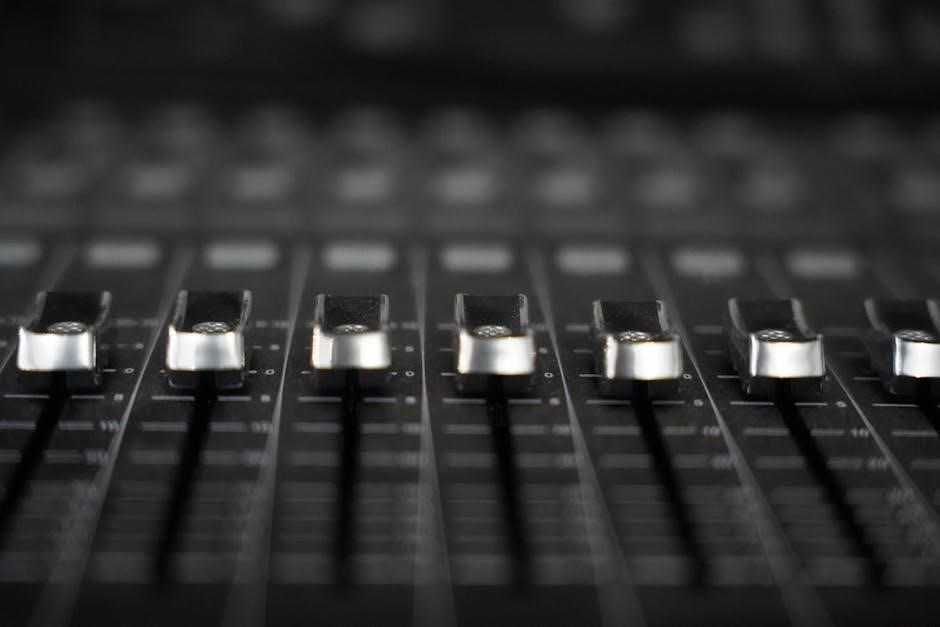
The GL2400’s channel faders provide precise control over individual channel levels, allowing for dynamic mixing and balancing of your audio sources․ These 60mm faders offer a smooth and responsive feel, crucial for nuanced adjustments during live performance or recording sessions․
Each channel also features a mute switch, enabling quick silencing of individual signals without altering the fader position․ This is invaluable for quickly addressing unwanted noise or temporarily removing instruments from the mix․ Proper fader technique, combined with strategic muting, allows for a polished and controlled sound, ensuring clarity and impact throughout your performance or recording․

Bussing & Outputs
The GL2400 offers versatile bussing options, including stereo, mono, matrix, and direct outputs, providing flexible routing for diverse sound reinforcement and recording applications․

Stereo Buss Configuration
The GL2400’s stereo buss is the primary pathway for creating a mixed stereo output․ Channels are typically routed to the stereo buss via the pan controls and channel faders․ This allows for precise placement of sounds within the stereo field, creating a wide and immersive listening experience․
The stereo buss features a dedicated master fader for overall level control, and can be utilized with external effects processors via insert points․ Monitoring options include dedicated stereo outputs for main speakers, nearfield monitors, and recording applications․ Careful gain staging on the stereo buss is crucial to maintain a clean signal and avoid distortion, ensuring a professional-quality final mix․ Understanding the stereo buss’s functionality is key to unlocking the GL2400’s full potential․
Mono Buss Configuration
The Allen & Heath GL2400 offers four independent mono busses, providing flexible routing options for subgroups or auxiliary sends․ These busses are ideal for consolidating multiple channels – like drums or backing vocals – into a single control point, simplifying the mixing process and allowing for cohesive processing․
Each mono buss features a dedicated level control and routing switch, enabling precise adjustment and direction of the signal․ They can be routed to the stereo buss for inclusion in the main mix, or utilized as separate outputs for front-of-house and monitor applications․ Proper gain staging on the mono busses is essential for maintaining signal clarity and preventing unwanted noise․ Utilizing the mono busses effectively enhances control and sonic cohesion․
Matrix Outputs
The GL2400’s matrix outputs provide a powerful routing capability, allowing users to create custom mixes independent of the main stereo or mono busses․ These outputs derive their signal from any combination of the input channels, busses, or external inputs, offering unparalleled flexibility for complex setups․
Each matrix output features a level control and pre/post fader switching, enabling precise signal shaping and routing decisions․ They are commonly used for feeding separate monitor mixes, creating zone-specific sound reinforcement systems, or sending tailored signals to recording devices․ Understanding the matrix routing grid is crucial for maximizing the GL2400’s potential․ Careful configuration ensures optimal signal distribution and control within diverse audio environments․
Direct Outputs
The GL2400 features direct outputs on each channel, providing a clean, unprocessed signal path directly from the input stage․ These outputs are invaluable for multi-track recording, allowing for independent capture of each channel’s signal before any equalization, effects, or bussing is applied․
Direct outputs offer a pre- or post-fader selection, catering to different recording workflows․ Pre-fader captures the raw input signal, while post-fader includes the channel fader level․ These outputs are typically 1/4″ TRS connectors, suitable for connection to audio interfaces or recording consoles․ Utilizing the direct outputs unlocks the GL2400’s potential as a front-end for professional recording applications, ensuring high-quality signal capture and flexibility in post-production․

Routing & Signal Flow
The GL2400 offers versatile internal routing options, enabling complex signal paths for live sound and recording, as detailed in the user manual․
Internal Routing Options
The Allen & Heath GL2400 boasts a flexible internal routing system, allowing signals from any input channel to be directed to various outputs․ This includes the stereo buss, mono buss, matrix outputs, and direct outputs, providing extensive control over signal distribution․
Users can leverage the matrix outputs for creating custom mixes, sending tailored audio feeds to different zones or monitoring systems․ The direct outputs offer isolated signals from each channel, ideal for multi-track recording or feeding external effects processors․
Understanding these routing capabilities, as outlined in the user manual, is crucial for maximizing the mixer’s potential․ Careful signal path management ensures optimal sound quality and efficient workflow during live performances or studio sessions․ The GL2400’s design prioritizes adaptability, catering to diverse audio engineering needs․

Understanding the Signal Path
Tracing the signal path within the Allen & Heath GL2400 is fundamental for effective operation․ Audio enters through input channels, proceeds through the gain stage, EQ section, aux sends, and pan controls․ Subsequently, signals are routed via the channel faders to either the stereo or mono buss․
From the buss, the signal travels to the master outputs, including matrix and direct outputs․ The user manual details each stage, emphasizing the impact of gain staging on overall sound quality․
Properly understanding this flow allows engineers to diagnose issues quickly and optimize the mix․ Knowing where each control affects the signal is key to achieving a polished and professional sound․ Mastering the signal path unlocks the GL2400’s full potential․

Operation & Setup
The GL2400’s operation relies on proper gain staging and level setting, detailed in the user manual, to achieve optimal performance for live sound applications․
Gain Staging Best Practices
Achieving optimal audio quality with the GL2400 hinges on meticulous gain staging․ Begin by setting the channel trim controls with the input source active, aiming for a healthy signal level without clipping․
Monitor the input meters closely; peaks should occasionally touch 0dB, but sustained signals should remain well below this threshold․
Avoid excessive gain at the input stage, as this amplifies noise․ Utilize the channel faders to control overall volume, rather than relying solely on trim․
Remember that each stage of the mixer – input, EQ, aux sends – can introduce gain․
Proper gain staging minimizes noise and maximizes headroom, resulting in a cleaner, more dynamic sound․ Consult the user manual for detailed diagrams illustrating the signal path and recommended levels․
Setting Levels for Live Sound
When configuring the GL2400 for live performance, a systematic approach to level setting is crucial․ Start with all channel faders down and master faders at unity gain․ Gradually bring up each channel, beginning with essential elements like vocals and lead instruments․
Use the PFL (Pre-Fader Listen) function to individually check signal levels and ensure adequate headroom․ Avoid clipping at any stage – input, EQ, or output;

Balance the mix by ear, adjusting faders to achieve a cohesive sound․ Pay attention to the stereo image using the pan controls․ Regularly monitor the main output meters to prevent overloading the PA system․
Remember to consider the acoustics of the venue and adjust levels accordingly․ The user manual provides valuable insights into optimizing the GL2400 for various live sound scenarios․
Troubleshooting Common Issues
The Allen & Heath GL2400, while reliable, can occasionally present challenges․ A common issue is a lack of signal, often traced to incorrect input selection or a faulty cable․ Always verify connections and ensure phantom power is engaged for condenser microphones․
Hum or buzz can indicate grounding problems; check all connections and power sources; Distorted sound usually points to excessive gain staging – reduce input levels and EQ boosts․
If a channel isn’t functioning, inspect the channel fader and mute switch․ The GL2400 service manual (GL2400 SM) offers detailed schematics for diagnosing internal faults․ Refer to online forums and the user manual for further assistance․
Maintenance & Service
Regular cleaning and, when necessary, professional repair are vital for the GL2400’s longevity․ Service manuals (GL2400 SM) and repair information are available online․
Cleaning the GL2400
Maintaining the cleanliness of your Allen & Heath GL2400 is crucial for reliable performance and extending its lifespan․ Before any cleaning, always disconnect the mixer from the mains power supply to prevent electrical shock․ Use a soft, dry cloth to gently wipe down the exterior surfaces, removing dust and grime․ Avoid using abrasive cleaners, solvents, or liquids directly on the mixer, as these can damage the finish or internal components․
For stubborn dirt, lightly dampen the cloth with a mild detergent solution, ensuring it’s wrung out thoroughly to prevent moisture ingress․ Pay particular attention to faders, knobs, and switches, as these areas accumulate dirt and oil from frequent use․ Compressed air can be used cautiously to remove dust from hard-to-reach areas, but avoid directing it forcefully into sensitive components․ Regular cleaning will help ensure optimal operation and a professional appearance for your GL2400․
Service Manual Availability (GL2400 SM)
The Allen & Heath GL2400 Service Manual (GL2400 SM) is a valuable resource for qualified electronics technicians undertaking repairs or in-depth troubleshooting․ This manual contains detailed schematics, block diagrams, component layouts, and diagnostic procedures essential for servicing the mixer․ It’s readily available for download from various online sources specializing in electronic service documentation․
Access to the GL2400 SM requires a degree of electronic expertise, as it assumes familiarity with complex circuitry and testing methodologies․ Attempting repairs without proper training and understanding can lead to further damage or safety hazards․ Several websites offer the service manual for purchase or free download; however, ensure the source is reputable to avoid corrupted files․ The GL2400 SM is a key tool for keeping this classic mixer operational for years to come․
Repair Information for Experts
Experienced electronics technicians will find the GL2400’s modular design facilitates targeted repairs․ Common issues often involve power supply components, EQ section potentiometers, or channel fader replacements․ Detailed schematics within the GL2400 Service Manual (SM) are crucial for tracing signal paths and identifying faulty components․ Online forums dedicated to audio equipment repair frequently host discussions regarding specific GL2400 problems and solutions․
Successful repair necessitates a well-equipped workshop, including soldering stations, multimeters, and oscilloscope․ Component-level repair is often required, demanding proficiency in soldering and desoldering techniques․ Sourcing replacement parts can sometimes be challenging, but specialized audio component suppliers typically stock suitable alternatives․ Remember to always prioritize safety when working with mains voltage and discharge capacitors before handling internal circuitry․